Haywards Heath
Haywards Heath is a central West Sussex market town with a fast rail link to London, making it a practical base for exploring the surrounding countryside, gardens and villages.
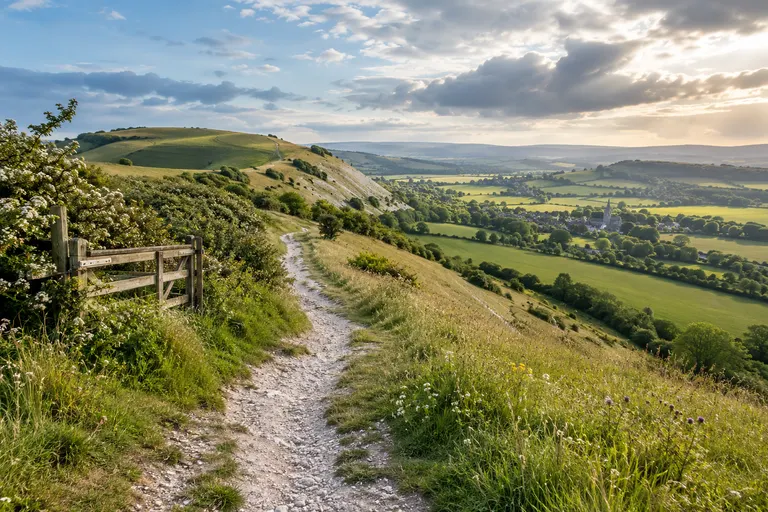
Haywards Heath is a central West Sussex market town with a fast rail link to London, making it a practical base for exploring the surrounding countryside, gardens and villages. The town itself is compact and functional; the real value is what sits around it. From the station a trip into the South Downs, to a historic house, or to the coast takes about 30 minutes by car or train. This article separates what is in the town from what is in the wider area and explains how to use Haywards Heath as a rail base.
The town itself
Haywards Heath is not a scenic medieval centre. It grew as a Victorian railway town, and its high street is a mix of independent shops, supermarkets, banks, and chain cafes. The station, on the Brighton Main Line, is the practical reason to use the town: trains run frequently to London Bridge and Victoria (about 45-50 minutes) and to Brighton (about 20-25 minutes), according to National Rail. The town centre is compact and walkable, with a small precinct, a library, and a handful of pubs and places to eat. It is a base for exploring the surrounding countryside, not a destination in itself.
The town centre has a market on Thursdays, run by the town council, but opening times and stall numbers vary by season; check the town council website for current details. For a quick lunch, the high street has the usual chain cafes and supermarkets; the nearby villages of Lindfield and Cuckfield have independent cafés and pubs but are separate settlements, not suburbs of Haywards Heath.
Day trips from the station
For day trips, treat Haywards Heath as a rail hub. From the station, the South Downs, the coast, and the central Weald are reachable without a car, but connections require careful planning. Buses from the station serve nearby villages, but Sunday services are often limited; check the current timetable before setting out. If driving, parking in the town centre is easier than in many West Sussex towns, but on a sunny Saturday the car parks near the station and the Broadway fill early.
From the station, the South Downs, the Weald, and the coastal towns of Worthing and Shoreham sit within about 30 minutes by car or bus.
Gardens and historic houses
Several significant gardens and historic houses lie within a short drive or bus ride of Haywards Heath station. Each is a separate destination with its own opening arrangements and character.
Wakehurst
Wakehurst, managed by the Royal Botanic Gardens, Kew, occupies 535 acres near Ardingly. It holds the Millennium Seed Bank and a mix of formal gardens, woodland, and international plant collections. The site sits about 15 minutes by car from Haywards Heath station; a bus service runs from the station but is infrequent on Sundays. Wakehurst is not the same place as Kew Gardens in London, though the two share a parent organisation.
Borde Hill Garden
Borde Hill Garden, just north of Haywards Heath, is a privately owned garden set around a Tudor-origin house. It contains a series of compartment gardens, woodland walks, and a collection of champion trees. The garden runs a seasonal programme of events and has a café. It is reachable by car or a short taxi ride from the station.
Nymans
Nymans, a National Trust property near Handcross, combines a ruined Gothic-style house with an Arts and Crafts garden. The garden includes a walled garden, a rose garden, and woodland walks. Nymans is about 15 minutes by car from Haywards Heath; bus connections are limited, so a car or taxi is the more reliable option.
Sheffield Park and Garden
Sheffield Park and Garden, another National Trust property, lies east of Haywards Heath near the Bluebell Railway. The garden is known for its series of landscaped lakes and autumn colour. It is about 20 minutes by car from Haywards Heath. The Bluebell Railway, a heritage steam railway, runs between Sheffield Park and East Grinstead and can be combined with a visit to the garden.
The South Downs
The South Downs National Park begins roughly 10 miles south of Haywards Heath. The escarpment at Devil’s Dyke, Ditchling Beacon, and the Seven Sisters cliffs are all reachable by car or by train-and-bus combinations from Haywards Heath station. The South Downs Way, a long-distance footpath, runs across the top of the escarpment and offers walks with long views to the coast and the Weald. Train stations at Hassocks, Lewes, and Brighton provide access points to the downs; each is a short rail journey from Haywards Heath.
The coast
Brighton is the nearest major coastal town, about 20-25 minutes by train from Haywards Heath. It has a pier, the Royal Pavilion, and a dense network of shops, restaurants, and cultural venues. Further west, Worthing and Shoreham-by-Sea are smaller coastal towns with pebble beaches, promenades, and a quieter pace. All three are reachable by direct train from Haywards Heath station.
Practical notes
Haywards Heath station has step-free access to all platforms, a ticket office, and a small concourse with a coffee kiosk. The town centre is a five-minute walk from the station. Taxis are available at the station rank; booking ahead is advisable for trips to gardens and villages, especially on Sundays and bank holidays.
The town itself has a compact high street, a Waitrose, a small shopping centre, and several chain coffee shops. It is not a tourist destination; it is a functional base with good rail links to London Victoria and Brighton. The station is the main reason most visitors arrive.
For day trips, the key is to treat Haywards Heath as a rail hub. From the station, the South Downs, the coast, and the central Weald are reachable without a car, but connections require careful planning. Buses from the station serve nearby villages, but Sunday services are often limited; check the current timetable before setting out. If driving, parking in the town centre is easier than in many West Sussex towns, but on a sunny Saturday the car parks near the station and the Broadway fill early.
Read next
-
East Grinstead
East Grinstead sits in the far north-east of West Sussex, close to the Surrey and Kent borders, and is the county’s easternmost town of any size.
-
Burgess Hill
Burgess Hill sits in the central Weald of West Sussex, about halfway between Brighton and Crawley, and is best understood as a practical base rather than a destination in its own right.
-
Arundel
Arundel sits in the Arun Valley on the western edge of the South Downs National Park, roughly halfway between Chichester and Worthing.
-
Bognor Regis
Bognor Regis is a seaside town on the West Sussex coastal plain, roughly 10 miles south-east of Chichester and about 20 miles west of Worthing.
-
Chichester
Chichester is the historic heart of West Sussex, a city with Roman roots and a compact centre that is easy to explore on foot.
-
Crawley
Crawley is West Sussex’s largest town, a postwar New Town that grew around a medieval market core, and the place most visitors to the county pass through without stopping.