West Sussex by bus
West Sussex by bus. Build day trips using the county's rural and coastal bus network, focusing on routes that connect stations to attractions beyond rail corridors.
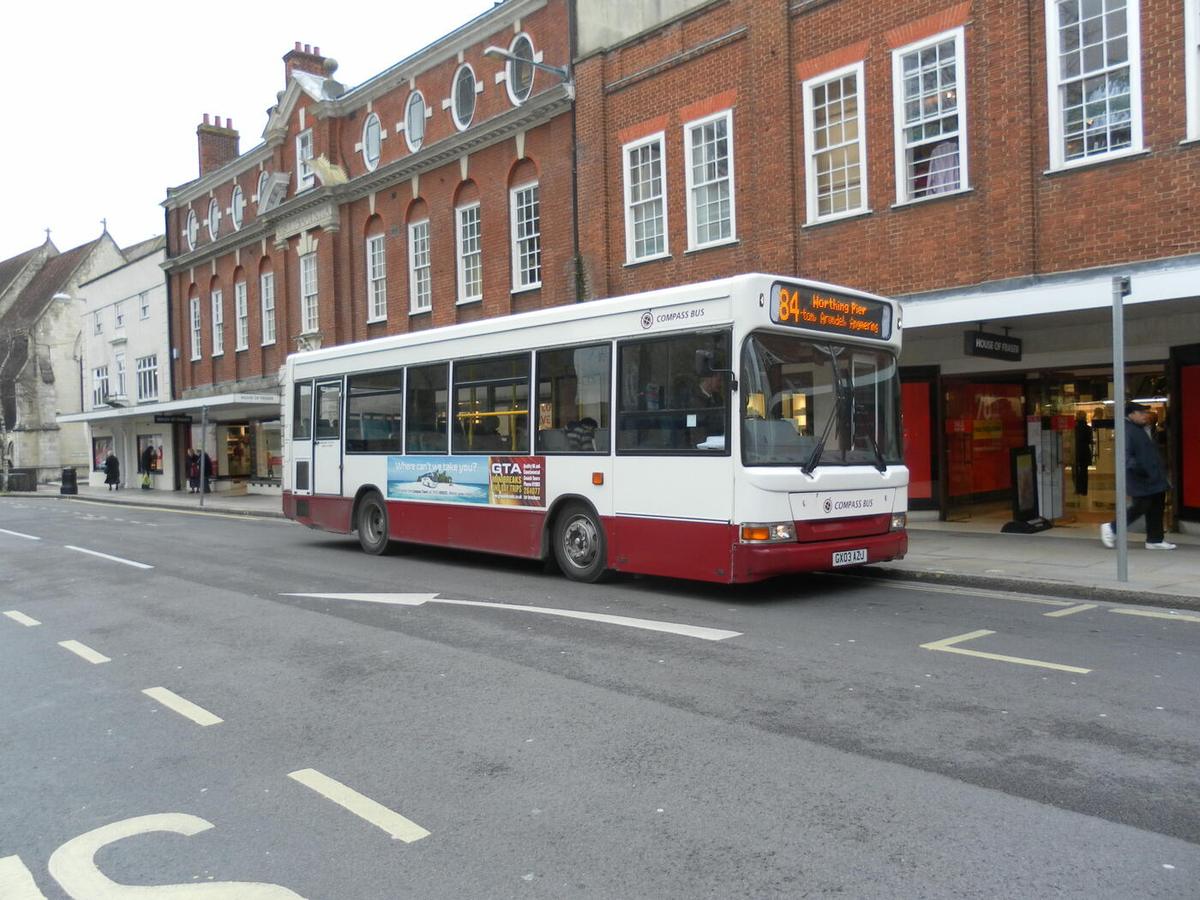

Start with the interactive West Sussex bus routes map from West Sussex County Council (west sussex gov uk, interactive bus map). This map shows every bus route in the county, with each line colour-coded by operator and frequency. Zoom in to any area to see the route numbers and where they stop. Use this map to identify which bus routes connect the rail hubs you can reach by train to the attractions you want to visit.
Plan the trip: a three‑step method for a West Sussex by bus day out
Building a day trip around West Sussex buses means working backwards from the last bus home. Rural options can stop as early as mid‑afternoon, so the return journey is the first thing to check.
Step 1: Find your rail hub and bus route
Use the National Rail journey planner (national rail co uk) to get to a stop with a bus interchange. The key rail‑to‑bus points are Chichester, Worthing, Horsham, Haywards Heath, East Grinstead, Barnham, Pulborough, Amberley and Arundel. At each of these the bus stands are within a few minutes’ walk. Then open the West Sussex interactive bus map to see which route from that interchange goes towards your destination.
Step 2: Check the schedule for your chosen route
Every West Sussex bus route has a PDF schedule published by the county council (west sussex gov uk, bus timetables). Look for the timing points, these are the named stops where the bus is scheduled to arrive. Intermediate stops are estimated, so add a few minutes if you are boarding at a request stop. Pay attention to the symbols printed on the schedule: ‘H’ means the journey runs on school holidays only; ‘S’ means schooldays only; ‘NS’ means no Saturday operation; ‘NSD’ means no Sunday or bank holiday operation; and ‘A’ means the journey runs only if you pre‑book or signal the driver. For rural routes that run fewer than four trips per day each way, note the time of the last return journey before you set off.
Step 3: Plan the walk at the other end
Many bus stops on the South Downs and in the Weald are on main roads, not at the attraction entrance. Use the South Downs National Park bus discovery map (south downs gov uk, bus discovery map) to see which bus stops are closest to footpaths, viewpoints and visitor sites. A short walk from the bus stop is often part of the day out. The Compass Travel route 1 stops at Whiteways Lodge, which gives direct access to the South Downs Way. The Stagecoach route 54 stops near West Dean Gardens and Kingley Vale. The Metrobus route 270 stops near Wakehurst, Ardingly Reservoir and the Bluebell Railway.
Fare tips: choose the right ticket for your day
The cheapest option for a day of multiple bus journeys across different operators is the Discovery ticket (west sussex gov uk, Discovery ticket). This ticket is valid on most buses in West Sussex, Brighton & Hove, East Sussex, Surrey and Kent. Adult, child, family (up to two adults and three children) and group (up to five adults) price bands are set by West Sussex County Council and revised annually; check the council’s Discovery ticket page for current figures. Buy it from the driver with contactless or cash, or through the Stagecoach app. If you are only using Stagecoach buses all day, the South Downs Dayrider covers West Sussex and parts of Hampshire; adult and child price bands are set by Stagecoach and published on its website. For Compass Travel operation only, the Compass Day Ticket adult price is set by Compass Travel. For Metrobus operation only, the Metrovoyager adult price is set by Metrobus. Holders of an English National Concessionary Travel Scheme pass can travel free off‑peak (09:30-23:00 weekdays, all day weekends and bank holidays) on all West Sussex bus operators. Contactless debit and credit cards, plus Apple Pay and Google Pay, are accepted on all major operators.
Real‑time tracking tools
West Sussex buses are tracked in real time through the UK Bus Checker app, which covers Stagecoach, Compass Travel and Metrobus. Stagecoach also has its own app for its operation. Compass Travel tracking is available through UK Bus Checker and Traveline South East. At key bus stops, digital displays show the next departure times; at other stops you can send the SMS code printed on the stop flag to Traveline for a real‑time update. Use these tools on the day to confirm the bus is running, especially on rural routes where cancellations are more likely on Sundays and bank holidays.
Rural bus travel tips
Rural bus operation in West Sussex is infrequent by design, many routes run only two or three trips per direction per day. For example, Compass Travel route 99 from Petworth to Chichester runs three trips each way (2026 schedule). The golden rule: check the return journey time before you leave the bus stop. Write it down or take a photo of the schedule. If you miss the last bus, the nearest rail hub may be several miles away and a taxi could cost more than your day ticket. For areas with no fixed‑route bus, West Sussex Connect (west sussex gov uk, West Sussex Connect) provides pre‑booked community transport with a flat single‑journey fare set by the county council; check the West Sussex Connect page for the current rate. You need to book at least 24 hours in advance by phone or app. This option covers parts of the South Downs and other rural areas not served by regular buses.
Seasonal bus services for the South Downs and coast
The South Downs National Park operates seasonal bus services that open up parts of the countryside that have no regular weekday operation.
South Downs Rambler
The South Downs Rambler (Stagecoach) runs from April to October on weekends and bank holidays, linking Winchester to Eastbourne via the South Downs Way, with stops at Devil’s Dyke, the high point at Ditchling, Seven Sisters and Birling Gap.
Beach Bus
The Beach Bus (Stagecoach) runs from late May to early September daily, connecting Chichester with West Wittering Beach and East Head.
Petworth Park Shuttle
The Petworth Park Shuttle (Compass Travel) runs from April to October on weekends and bank holidays, linking Pulborough station to Petworth House and Park. All three seasonal options are marked on the South Downs National Park seasonal bus services page (south downs gov uk, seasonal bus services).
Combine bus with short walks
A bus‑and‑walk combination lets you reach places that no bus serves directly. The method: ride the bus to a stop near a footpath, walk across country to another bus stop on a different route, and catch the next bus back. For this to work, you need the schedules for both routes and enough daylight. The South Downs National Park bus discovery map shows which bus stops have footpath connections. A classic example: take the Stagecoach route 60 from Midhurst to Chichester, which runs hourly on weekdays (2026 schedule). Get off at Cocking, walk the South Downs Way section to West Dean (about 5 km), and catch the same route 60 from West Dean back to Chichester. Another: ride the Compass Travel route 1 from Worthing to Whiteways Lodge, walk the South Downs Way to Bignor Hill, and pick up the route 1 back from Bignor Hill stop. Always carry a paper map or have an offline map on your phone, mobile signal is patchy in the Weald and on parts of the Downs.
West Sussex bus routes map: how to read it for a day out
The county council’s interactive map is the fastest way to see which operators cover which corridors. Each route line is colour‑coded by operator: Stagecoach routes appear in one colour family, Compass Travel in another, Metrobus in a third. Click any route line to see the route number, operator name and a link to the full schedule. Use the map’s layer control to toggle between weekday, Saturday and Sunday patterns; some rural routes vanish entirely on Sundays. The map also marks rail interchanges with a symbol, making it straightforward to connect a train arrival with a bus departure. When planning, zoom in on the area around your chosen rail hub and trace the route lines outward to find the nearest stop to your destination.
South Downs bus service: what runs and when
South Downs bus service coverage splits into three tiers. The all‑year daily network includes Stagecoach route 60 (Midhurst to Chichester) and Compass Travel route 1 (Worthing to Midhurst), both of which stop at multiple South Downs Way access points. The weekend‑only seasonal tier includes the South Downs Rambler, which fills gaps in the weekday network across the central Downs. The pre‑booked tier, West Sussex Connect, reaches hamlets and downland valleys that have never had a fixed route. Check which tier your intended stop falls into before you travel; a stop that appears on the map may only have a bus on summer Sundays.
Checklist for a successful bus day out
- [ ] Check the last return bus time before you leave the starting stop.
- [ ] Download or photograph the PDF schedules for all routes you plan to use.
- [ ] Buy a Discovery ticket from the driver on the first bus (or use a concessionary pass).
- [ ] Install UK Bus Checker app and check real‑time tracking on the day.
- [ ] Bring a paper or offline map for the walking sections.
- [ ] Check the Met Office forecast for the South Downs (metoffice gov uk, South Downs National Park weather), chalk paths become slippery and muddy after rain.
- [ ] Check for bus service changes on the West Sussex County Council updates page (west sussex gov uk, bus service changes), schedules change in April and October.
- [ ] For families: look for low‑floor buses with wheelchair ramps (all new buses in West Sussex have these); guide dogs are allowed; folding bikes are permitted, but full‑size cycles are generally not carried on buses.
- [ ] For access needs: West Sussex Connect (pre‑booked community transport) can fill gaps where fixed‑route buses do not run.
- [ ] For wet‑weather resilience: coastal routes on the Stagecoach Coastliner 700 (Brighton to Portsmouth) run up to every 10 minutes in summer daytime (2026 schedule) and are less affected by weather than downland routes. If the forecast is poor, switch to a coastal bus day instead of a South Downs walk.
One sentence that sets West Sussex apart
West Sussex is the only county in south‑east England where a single day ticket (the Discovery ticket) covers every bus operator, every rail‑linked market town and both the South Downs National Park and the coast on one network, making a car‑free day out viable from Chichester Harbour to the Weald without changing ticket type.
Frequently Asked Questions
How do I find which bus goes from a railway station to my destination?
Open the West Sussex interactive bus map (west sussex gov uk, interactive bus map) and zoom in on the station. The map shows all bus routes serving that station, colour‑coded by operator. Click a route to see its timetable. For stations with a bus station adjacent (Chichester, Horsham, Worthing, Haywards Heath, East Grinstead) the bus stops are signed from the rail platform.
What happens if the last bus is cancelled and I am stuck in a rural area?
Phone a local taxi company, numbers are usually posted at the bus stop or available via Traveline South East. If you have a mobile signal, use the UK Bus Checker app to see if an alternative bus is running. For future trips, check the West Sussex County Council bus service changes page (west sussex gov uk, bus service changes) before you travel, and consider using West Sussex Connect (pre‑booked community transport) for very rural destinations.
Can I take a bicycle on a West Sussex bus?
Full‑size bicycles are generally not permitted on West Sussex buses. Folding bikes, folded and stored in a bag, are allowed on all operators. Some Compass Travel routes may carry bikes in the luggage hold at the driver's discretion, but this is not guaranteed. For cycle‑bus combinations, use the train to get closer to your destination and cycle the final section.
Are bus stops on the South Downs clearly signed for walkers?
Many South Downs bus stops have a flag with the route number and a timetable case, but not all have a shelter or a named sign. The South Downs National Park bus discovery map (south downs gov uk, bus discovery map) shows the exact location of each stop and the footpath connections. On the ground, look for a yellow bus stop pole with the route number, some are just a pole at the roadside with no shelter.
Read next
-
 West Sussex by train
The one fact that sets the material below apart: West Sussex has no railway line running through the centre of the South Downs National Park, so every hill walk from a station begins with…
-
 Family days out
Pick one factor that matters most right now: the age of your youngest child, tomorrow’s weather, the attention span of your group, or the facilities you need.
-
 Rainy-day plans
West Sussex is not a single landscape. Rain behaves differently on the chalk downs, the clay Weald, the coastal plain and the tidal harbours.
-
 A West Sussex weekend
This weekend is for walkers and cyclists who want chalk downland, panoramic views and a pub lunch.
-
 Plan a West Sussex day around the weather
West Sussex is a patchwork of chalk downland, coastal plain, river valleys and Weald, and the weather rarely behaves the same across all of them in one day.
-
 Towns and places
West Sussex is a patchwork of distinct landscapes: chalk downland, coastal plain, river valleys and the Weald. Each has its own character, access patterns and seasonal rhythms.