Midhurst and Petworth
Midhurst and Petworth. Compare two inland market towns with distinct artistic and architectural draws.
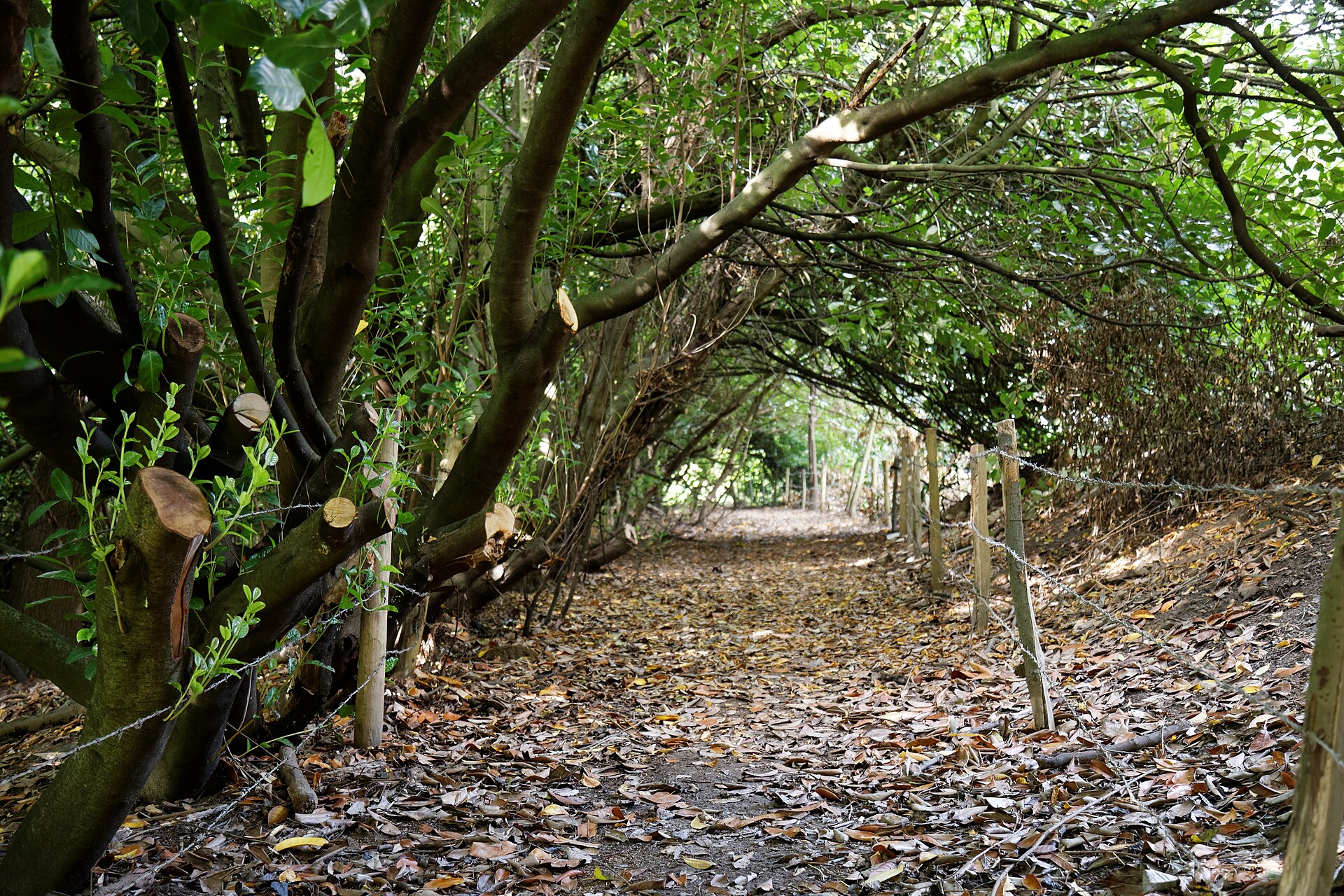

Which town should you base a day around?
Midhurst sits inside the South Downs National Park, with the ruined Tudor Cowdray estate as its centrepiece, while Petworth lies just outside the park boundary and is dominated by the National Trust’s Petworth House and its Capability Brown deer park. Choose Midhurst if you want a compact town walk that links a historic ruin with a riverside path and a hilltop viewpoint. Choose Petworth if you want a single-site visit to a major art collection and parkland, with a shorter walk that loops through the pleasure ground and the deer park. Both towns are small enough to explore on foot in a few hours, and a direct bus connects them, so you can visit both in one day without a car.
Midhurst and Petworth: comparing the two towns
The core difference between the two towns is the type of day they create. Midhurst rewards a sequential walk where the ruin, river and hill unfold one after another. Petworth centres on a contained estate where the house, garden and park sit side by side. Neither town requires a car once you arrive, and the bus link between them turns a two-centre day into a realistic plan rather than a rushed checklist.
Key differences at a glance
| Attribute | Midhurst | Petworth |
|---|---|---|
| Main draw | Tudor ruins and riverside walk | 17th-century mansion and Capability Brown park |
| Walk difficulty | Moderate (one short hill) | Easy (flat) |
| Indoor option | Ruins are mostly roofless | Full house interior with art collection |
| Parkland | Small riverside path | Large deer park (free access) |
| Bus connection to other town | Bus 1 to Petworth (20 min) | Bus 1 to Midhurst (20 min) |
Midhurst town walk: ruin, river and hill in a 3.2 km loop
The walkable loop starts at North Street car park (GU29 9DJ), which has about 120 spaces and charges Monday and Saturday 08:00-18:00 according to West Sussex County Council. From the car park, walk south-east along North Street, then turn into Cowdray Lane to reach the entrance of Cowdray ruins (postcode GU29 0AL).
Cowdray ruins visit
The ruins are managed by the Cowdray Heritage Trust and are typically open April to October, with last admission at 15:30. The surviving gatehouse and hall range are the main features of this 16th-century Tudor palace, which was largely destroyed by fire in 1793. Because the structure is mostly roofless, a visit here is closer to an outdoor heritage walk than an interior tour. Check the trust’s website before travelling, as opening months can shift slightly each year.
From the ruins, follow the footpath south-west to the River Rother. The path runs alongside the river for about 800 metres, passing under the town bridge and continuing to the foot of St Ann’s Hill. This is a short, steep climb (about 40 metres of ascent) that gives a view over the town and the Cowdray estate. The descent brings you into the Market Square, where the main shops and pubs are clustered. The loop returns to North Street car park via Church Street and North Street, completing about 3.2 km (2 miles) on mostly level ground apart from the hill section.
Decision point: If you have limited time or want to avoid the hill, skip St Ann’s Hill and instead stay on the riverside path back to the car park, which shortens the walk to about 2 km.
Petworth House opening times and the estate loop
The Petworth loop begins at Pound Street car park (GU28 0DX), which has about 80 spaces and charges daily 08:00-18:00. Walk north up Lombard Street to the entrance of Petworth House (postcode GU28 9LR).
Petworth House opening times
The house is owned by the National Trust and is typically open Saturday to Wednesday, March to October, with last admission at 15:30. The late 17th-century mansion houses a notable art collection including works by J.M.W. Turner. The parkland is open daily year-round and costs less than the full property. Confirm exact opening days on the National Trust website before visiting, as the pattern can vary around holidays and winter months.
From the house entrance, walk through the pleasure ground (the formal gardens to the south-east) and then into the deer park. The park was landscaped by Lancelot ‘Capability’ Brown in the 1750s and features a large lake, ancient trees and a herd of fallow deer. Follow the main path south-west through the park for about 1.5 km until you reach the southern boundary, then turn north-east along the edge of the park to return to the town. The route passes St Mary’s Church and the Market Square before returning to Pound Street car park. Total distance is about 3.5 km (2.2 miles) with negligible elevation gain.
Decision point: If you only want the park, you can enter for a lower fee and skip the house. The park walk alone takes about 1 hour at a steady pace.
Practical arrival advice
By car
| Town | Long-stay car park | Spaces | Charging period |
|---|---|---|---|
| Midhurst | North Street (GU29 9DJ) | 120 | Mon, Sat 08:00-18:00 |
| Petworth | Pound Street (GU28 0DX) | 80 | Daily 08:00-18:00 |
Both car parks are pay-and-display. Arrive before 10am on weekends to avoid queuing, as both towns have limited on-street parking.
By public transport
The nearest rail station to Midhurst is Haslemere in Surrey, served by trains from London Waterloo. From Haslemere, take Stagecoach South bus route 70 to Midhurst (about 30 minutes). The nearest station to Petworth is Pulborough, served by trains from London Victoria and Horsham. From Pulborough, take Compass Travel bus route 1 to Petworth (about 15 minutes).
For a combined day without a car, the recommended direction is:
- Rail to Haslemere
- Bus 70 to Midhurst (visit ruins and town walk)
- Bus 1 from Midhurst to Petworth (about 20 minutes, hourly frequency)
- Visit Petworth House and park
- Bus 1 from Petworth to Pulborough (about 15 minutes)
- Rail from Pulborough
The bus fare for each single journey is typically about £6, according to West Sussex County Council’s public transport information. Check timetables at www.westsussex.gov.uk/roads-and-travel/public-transport, as Sunday services may be reduced.
How to combine both towns in one day
If you have a full day (say 9am to 6pm), you can visit both towns by following the rail-bus route above. A realistic schedule:
- 09:30: Arrive Haslemere, take bus 70
- 10:00: Arrive Midhurst, walk the 3.2 km loop (1.5 hours including ruins visit)
- 12:00: Lunch in Midhurst
- 13:00: Bus 1 to Petworth
- 13:30: Arrive Petworth, walk the 3.5 km loop (2 hours including house visit)
- 16:00: Bus 1 to Pulborough
- 16:30: Rail from Pulborough
This assumes you visit the ruins and the house exterior only. If you want to go inside both properties, you will need to choose one town for the interior and treat the other as a park-only stop.
More in this guide
Frequently Asked Questions
How long should I allow for the Midhurst town walk?
The full 3.2 km loop takes about 1.5 hours at a leisurely pace including a stop at the Cowdray ruins. If you skip St Ann’s Hill, allow 1 hour.
Are the Cowdray ruins open in winter?
Typically the ruins are open only from April to October, according to the Cowdray Heritage Trust. Check www.cowdray.co.uk for current dates.
Can I enter Petworth Park without paying for the house?
Yes. The park only ticket is separate from the full property ticket and gives access to the deer park and pleasure ground. The park is open daily year-round.
What is the best way to travel between Midhurst and Petworth without a car?
Bus route 1 operated by Compass Travel runs hourly between the two towns, taking about 20 minutes. Check the timetable at www.westsussex.gov.uk/roads-and-travel/public-transport for the latest schedule.
Read next
-
 Chichester guide
Your starting point is the cathedral, consecrated in 1108 (Chichester Cathedral official site). Its 82-metre spire, built in the 14th century, is the landmark that orients every walk.
-
 Arundel guide
Arundel packs three distinct draws into one compact town: a Norman castle, a wetland reserve and a riverside walk along the Arun.
-
 Worthing guide
Plan a Worthing day by deciding whether you want the promenade, the culture, or the South Downs, and then picking one as your anchor.
-
 Horsham and Crawley
Two towns, eight miles apart in the north of West Sussex, operating on different rhythms. Horsham is a historic market town with direct access to the South Downs and the wooded Weald.
-
 The South Downs
 change character mile by mile across the chalk spine of West Sussex.